
Tasks
All BloxNote tasks and the shared task meter: where each mini-game spawns, how long it takes, how much risk it carries and how Investigators win by filling the bar.
Introduction
Tasks are the Investigator side's win condition, the pressure that forces Kira to act before the meter fills, and the clearest signal a lobby has for distinguishing honest players from bluffers. Every completed task raises one shared bar for the whole team, which means a single diligent player genuinely can drag a passive lobby toward victory. At the same time, tasks are where Investigators are most vulnerable: several mini-games lock your view onto a screen or panel, and a player whose camera is pinned is the easiest possible target for a close-range ID grab. Understanding which tasks are safe, which are traps, and how the meter changes the round's tempo is the difference between a team that wins by progress and a team that quietly loses while feeling busy.
BloxNote Task & Action Reference
| Task / Action | Where It Spawns | Approx. Duration | Risk Level | Team Value |
|---|---|---|---|---|
| Upload | Screen terminals in task rooms | Several seconds | High — view locked | Large meter chunk |
| Wires | Wall panels along corridors | Several seconds | Medium — time loss on errors | Steady meter progress |
| Meter | Team-wide HUD | Whole round | Decisive | Investigators win when full |
| Fake | Any task marker | Bluff duration | Low for Kira | Creates false alibi |
Task Breakdown
Upload Task
The highest-value task on the board and the one that gets the most players killed.
Wires Task
The safer of the confirmed mini-games, and the better choice when the lobby is hostile.
Task Meter
The shared bar that defines the Investigator win condition and the round's overall tempo.
Fake Progress Bluffing
The killing team's answer to the meter, and a tactic every Investigator needs to see through.
Core Mechanics
The task system runs on a single shared meter that both teams can see, which turns task work into a public race rather than a private checklist. Completing a mini-game adds progress to that bar immediately, and when it fills the Investigator side wins regardless of how many players remain. The two confirmed mini-games, upload and wires, behave very differently: the upload task holds your view on a terminal, leaving you blind to anyone approaching from behind, while the wires task keeps your camera free but punishes wrong connections with lost seconds. Because Kira can also stand at a task marker and appear to be working, the meter is simultaneously a win condition, an information source and a bluffing surface, and reading which players are genuinely contributing is one of the core skills of the game.
Advantages
The shared meter is the strongest anti-passivity mechanic in BloxNote. It guarantees that a round cannot stall forever, because an idle lobby loses by default as the bar creeps upward. For honest Investigators this is a gift: your contributions are visible to the whole team, and nobody can accuse you of doing nothing when the meter is clearly moving. Task work also gives the task side a fallback win condition that does not depend on convincing a suspicious lobby, which matters enormously in servers where communication is poor. Even a single player committed to the meter applies real, measurable pressure on the killing team.
Challenges
The cost of task work is vulnerability. Tasks anchor you to a fixed point on the map with your attention directed at a screen or panel, which is precisely the situation Kira wants for an ID grab. Community players also report that some tasks, particularly the upload interaction, fail to block vision properly, making it hard to notice someone closing distance behind you. On top of that, the task list is currently very small, with only upload and wires confirmed by players, so the variety that keeps task work interesting in similar games is limited, and a lobby that has memorised both spawns can predict where diligent players will be.
Frequently Asked Questions
How many tasks are in BloxNote?+
Do I have to finish every task to win?+
Can Kira complete tasks in BloxNote?+
Quick Tips
Do the dangerous task first, while the lobby is still large. Early in the round there are more players moving around, which makes it harder for Kira to isolate you during an upload, and you can afford the risk before the killing team has thinned the board. Leaving the view-locking task until the endgame, when three players remain, is how Investigators lose rounds that were otherwise winnable.
Report meter movement, not just task claims. In a meeting, the useful observation is that the bar jumped while a specific player was alone in a certain room, or that it stayed flat despite someone announcing completions. This kind of detail gives the lobby something measurable to argue about instead of trading unsupported accusations about who seems suspicious.
If you are new, do wires before upload. The wires panel keeps your camera free, so you can watch for approaching players while you work, and mistakes there cost time rather than your life. Once you know the panel layout and the safe routes to it, move on to uploads, because that task carries the largest meter value and is worth the added risk when you can pick your moment.
Never start a task with your back fully to an open corridor. Even if the task itself blocks your view, positioning matters: work from an angle where a passer-by enters your peripheral vision, or ask a nearby player to watch the entrance. A few seconds of spatial awareness is usually enough to turn a fatal ID grab into a failed attempt.
Treat a stalled meter as a warning sign, not a neutral fact. If the shared bar has barely moved across two phases, either the lobby is full of passive players or the killing team is successfully suppressing task work by camping the task rooms. In the second case, pushing a meeting and forcing people to account for their positions is often the only way to break the deadlock.
Featured
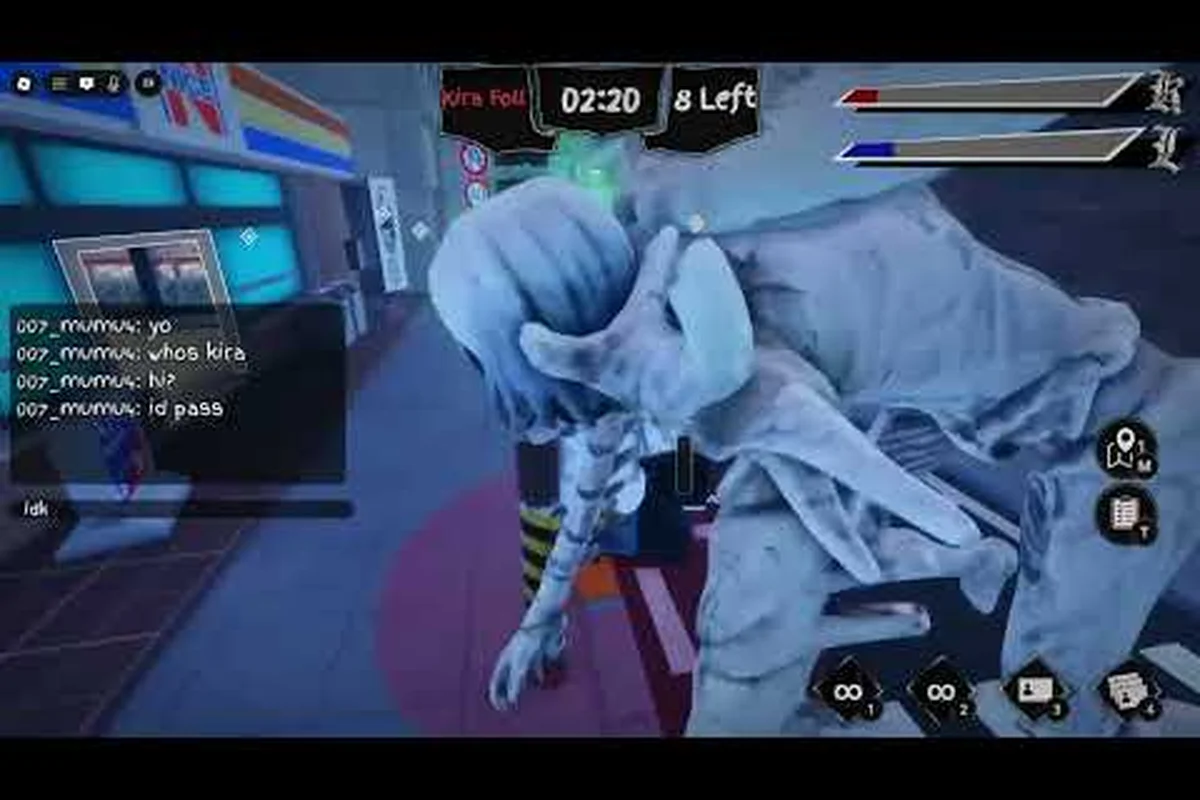
BloxNote All Tasks: Map Locations and Completion Order
Browse the complete BloxNote all tasks catalog with every map location, step-by-step completion order, and the upload and wiring tasks explained clearly.
BloxNote How Many Tasks: Count, Completion, Win Threshold
Find out exactly how many tasks BloxNote requires to win, how completion percentage is tracked, and how many tasks Kira must fake to blend in before the meeting.

BloxNote Task Bug: Fix Stuck Tasks, Glitches, Reset Steps
Troubleshoot every BloxNote task bug with proven fixes for stuck progress, broken mini-games, and the fastest reset steps so the task bar fills without restarting.
All Articles
BloxNote Task Guide: Fill the Bar Fast and Clear Every Round
Learn the BloxNote task guide for new investigators — how the shared task meter fills, which tasks reward the most progress, and the fastest routes to clear the bar.
BloxNote Hardest Task: Upload, Wiring, and Toughest Maps
Conquer the BloxNote hardest task with pinpoint map directions, time-saving routes, and exact steps for upload and wiring that trip up most players.
BloxNote Task Tips: Strategy, Fake Tasks, Meter Reads
Sharpen your BloxNote task tips with smart strategies for faking tasks as Kira, reading the task meter, and timing progress to avoid suspicion during the next vote.
BloxNote Upcoming Tasks: 2026 Roadmap and New Additions
Preview the BloxNote upcoming tasks on the 2026 roadmap — new package and delivery tasks, difficulty changes, and what developers have confirmed.